 MiG-25 Foxbat
MiG-25 Foxbat
MiG-25 Foxbat
The MiG-25 Foxbat was one of the most extreme aircraft ever produced during the Cold War, born from a time when raw performance was valued above all else. Designed by the Mikoyan-Gurevich Design Bureau in the late 1950s and early 1960s, the Foxbat was a direct response to perceived American threats such as the B-58 Hustler, the projected XB-70 Valkyrie, and later high-altitude reconnaissance aircraft like the U-2 and SR-71. Rather than attempting to match Western fighters in maneuverability, Soviet engineers focused on altitude, climb rate, and speed. The result was an interceptor capable of reaching the edge of space, built primarily from stainless steel and nickel alloys to withstand the immense heat generated at sustained Mach numbers. First flown in 1964 and introduced into service in the early 1970s, the MiG-25 became a symbol of Soviet aerospace philosophy and Cold War urgency.

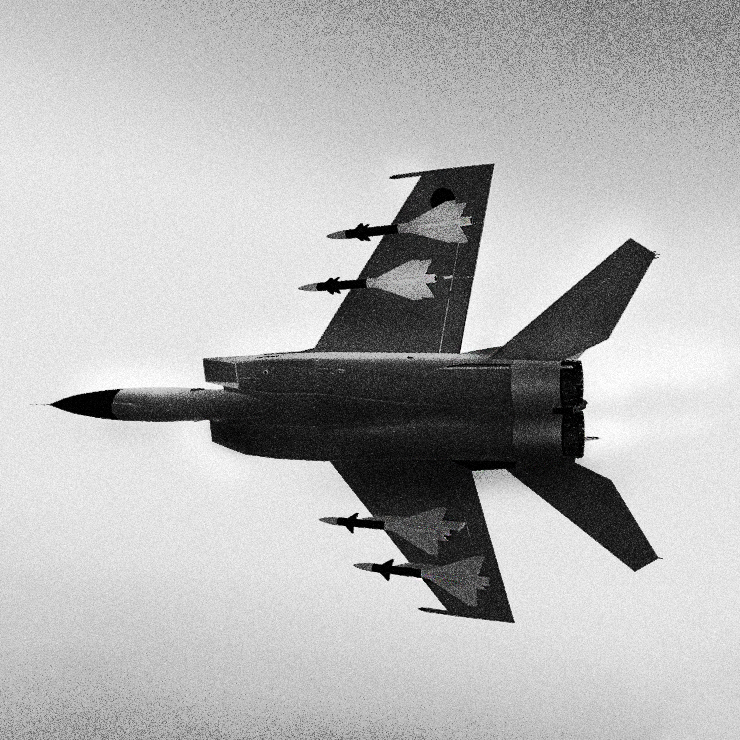
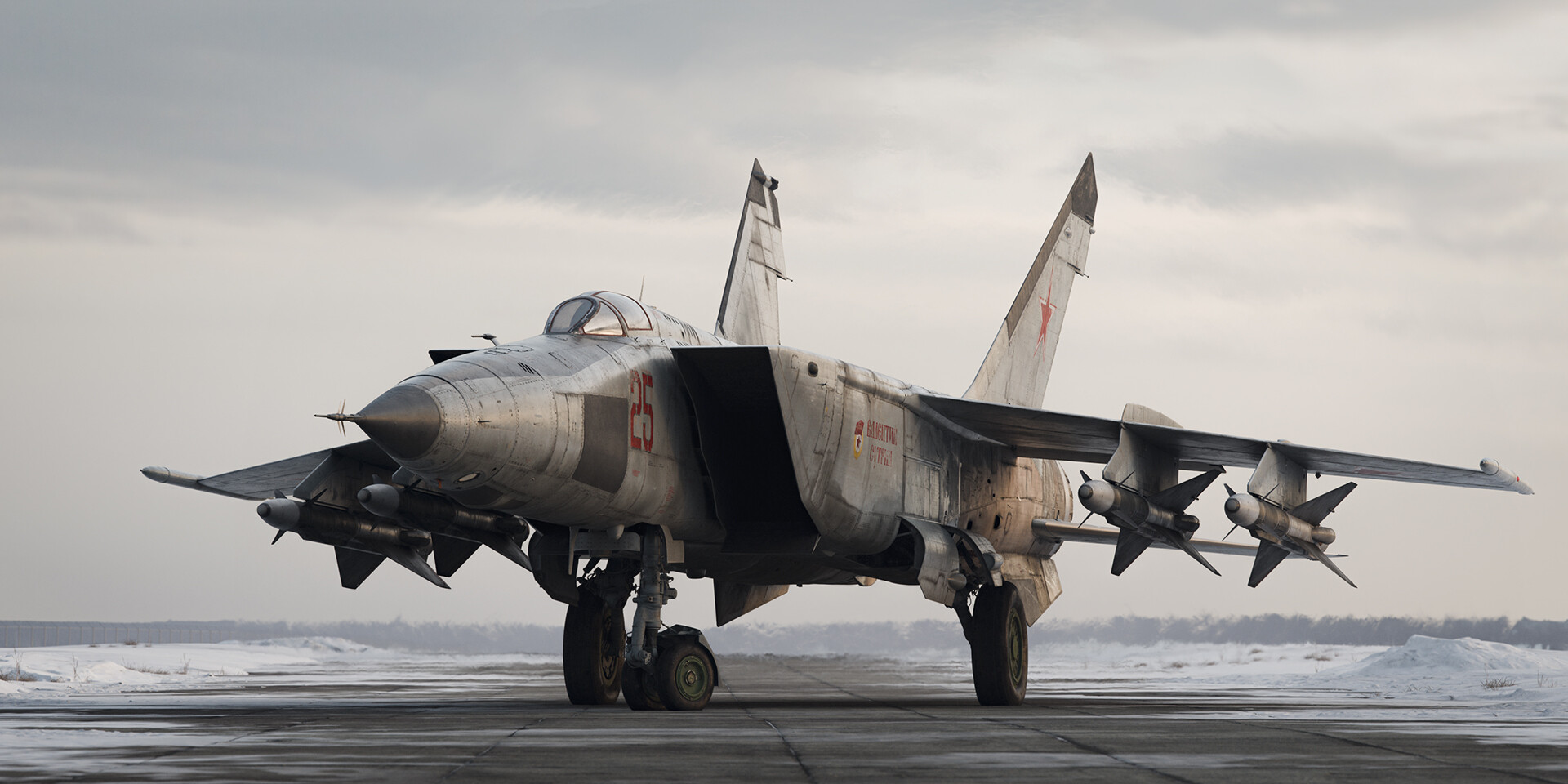
The MiG-25P was the original interceptor variant of the Foxbat, entering service in 1970 with the Soviet Air Defense Forces (PVO). Its primary mission was the interception and destruction of high-altitude, high-speed bombers and reconnaissance aircraft. The aircraft was equipped with the RP-25 Smerch-A radar, a powerful but relatively primitive system optimized for large targets operating at altitude. Propulsion was provided by two Tumansky R-15B-300 turbojet engines, delivering enormous thrust at the cost of fuel efficiency and engine lifespan. Armament consisted of four R-40 missiles, typically two R-40R semi-active radar-guided missiles and two R-40T infrared-guided missiles, both developed specifically for extreme-speed interceptions. The MiG-25P had no internal cannon and relied entirely on missile fire guided by ground-controlled interception, reflecting its narrow but highly specialized role during the early Cold War.
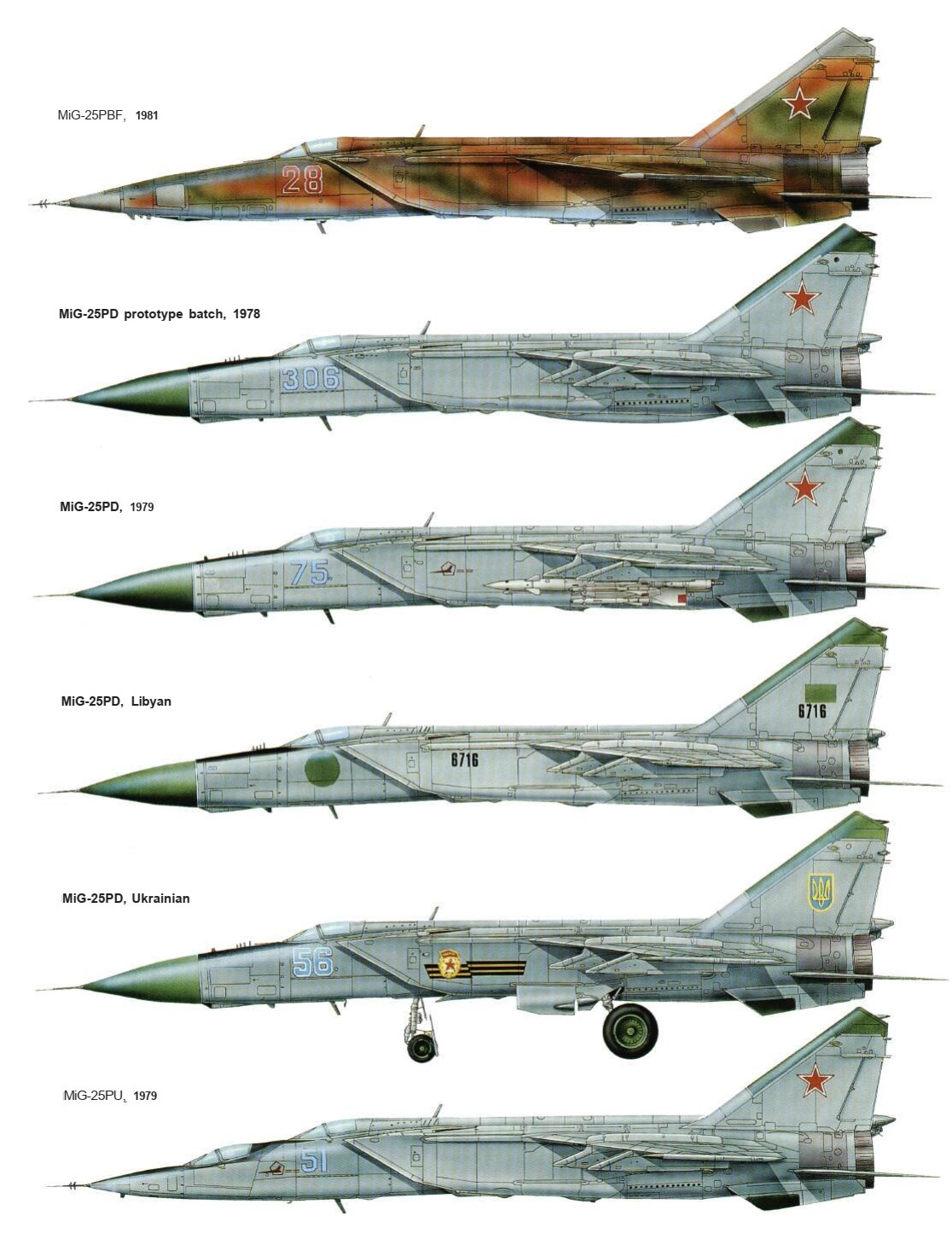
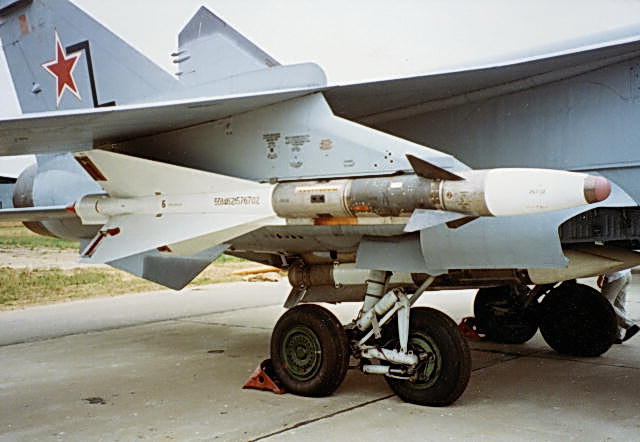
The MiG-25PD was a significantly improved interceptor variant rushed into service in 1978 following the defection of Viktor Belenko in 1976. This incident exposed serious weaknesses in the original MiG-25P, prompting the Soviet Union to accelerate modernization efforts. The PD introduced the RP-25M Saphir-25 radar, which offered improved reliability, enhanced resistance to electronic countermeasures, and limited look-down/shoot-down capability. The engines were upgraded to the Tumansky R-15BD-300 standard, improving durability and operational safety. Armament remained centered around the R-40 missile family, now using improved R-40RD and R-40TD variants with more capable seekers. Electronic warfare systems, navigation equipment, and pilot situational awareness were all enhanced, making the MiG-25PD a far more survivable and capable interceptor in a modern electronic battlespace.
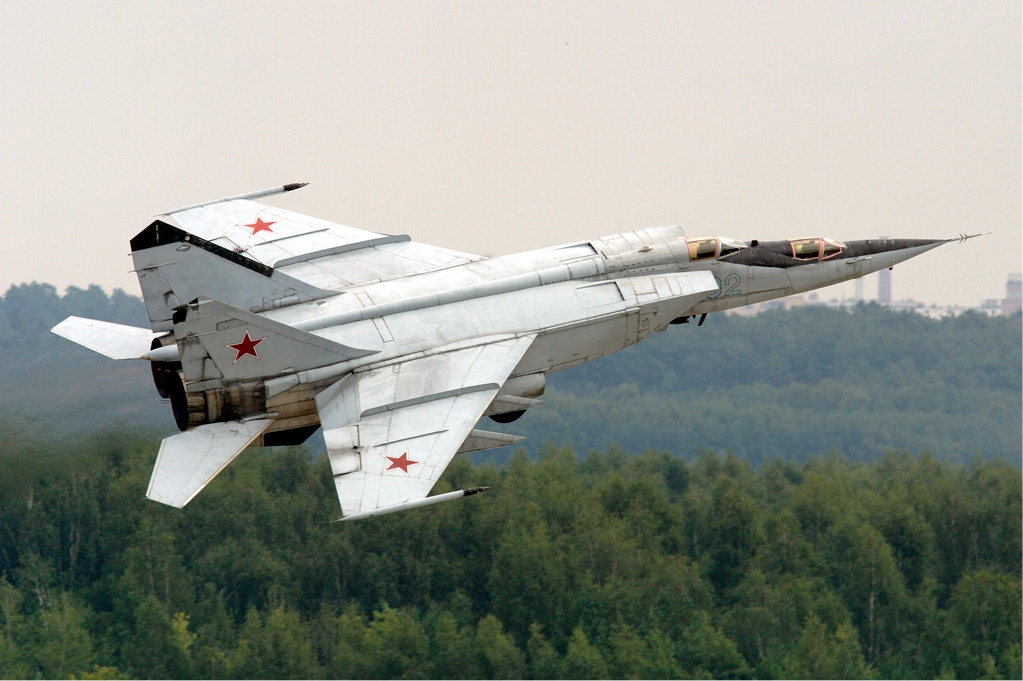
The MiG-25PDS was a comprehensive upgrade program applied to existing MiG-25P aircraft rather than a newly manufactured variant. Introduced shortly after the PD, the PDS brought older airframes up to nearly identical combat standards. These upgrades included the RP-25M radar, modernized electronic warfare systems, improved navigation avionics, and compatibility with the latest R-40 missile variants. Engines were upgraded to the R-15BD-300 configuration. The only meaningful operational difference between the MiG-25PD and MiG-25PDS was that the PDS could not carry external fuel tanks, slightly reducing endurance. In all other respects — radar performance, armament, and interception capability — the MiG-25PDS was functionally equivalent to the PD.
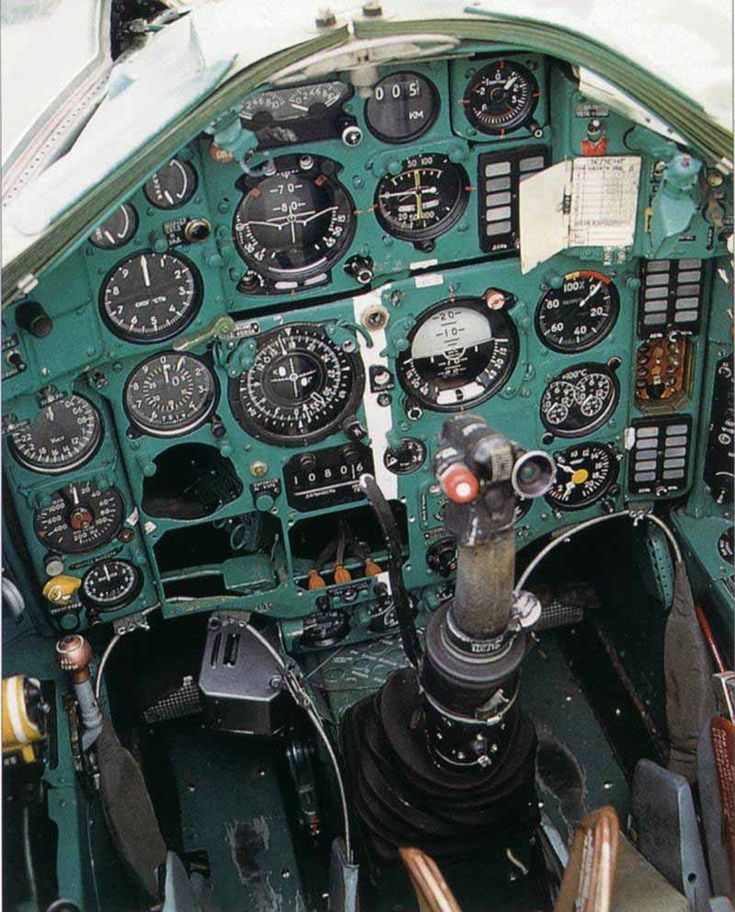
The MiG-25R reconnaissance variant entered service in 1969 and was designed to exploit the Foxbat’s extreme speed and altitude for strategic intelligence gathering. Equipped with high-resolution cameras, infrared sensors, and electronic intelligence equipment, the MiG-25R could penetrate heavily defended airspace with relative impunity. It carried no air-to-air armament, relying instead on speed and altitude for survival. Later sub-variants expanded its electronic surveillance capabilities, making it a critical intelligence asset throughout the Cold War.
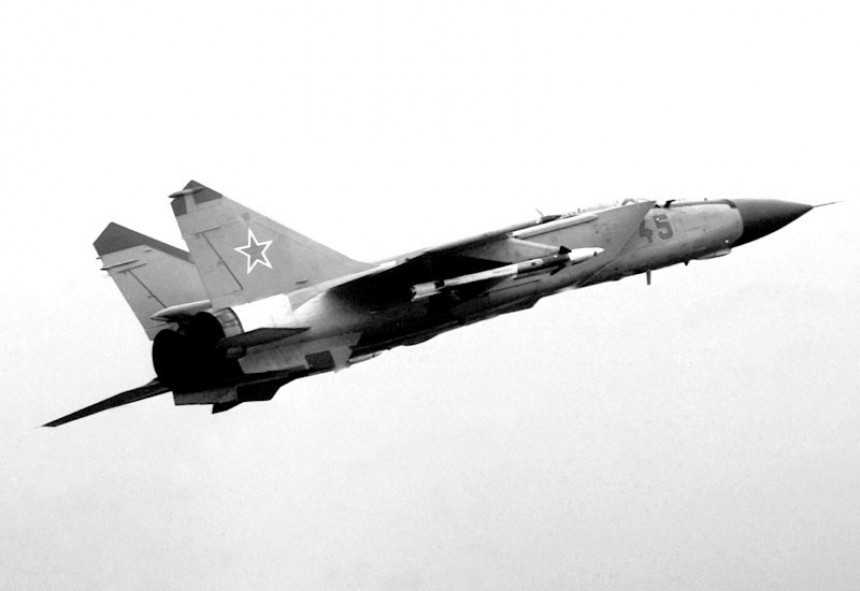
The MiG-25RB introduced a strike capability to the Foxbat family, entering service in the early 1970s. This variant combined reconnaissance equipment with bombing capability, carrying free-fall bombs and using high-speed toss-bombing techniques at extreme altitude. While lacking precision guidance, the RB’s speed made interception extraordinarily difficult. Some RB variants also retained electronic intelligence equipment, allowing them to perform multi-role missions over hostile territory.
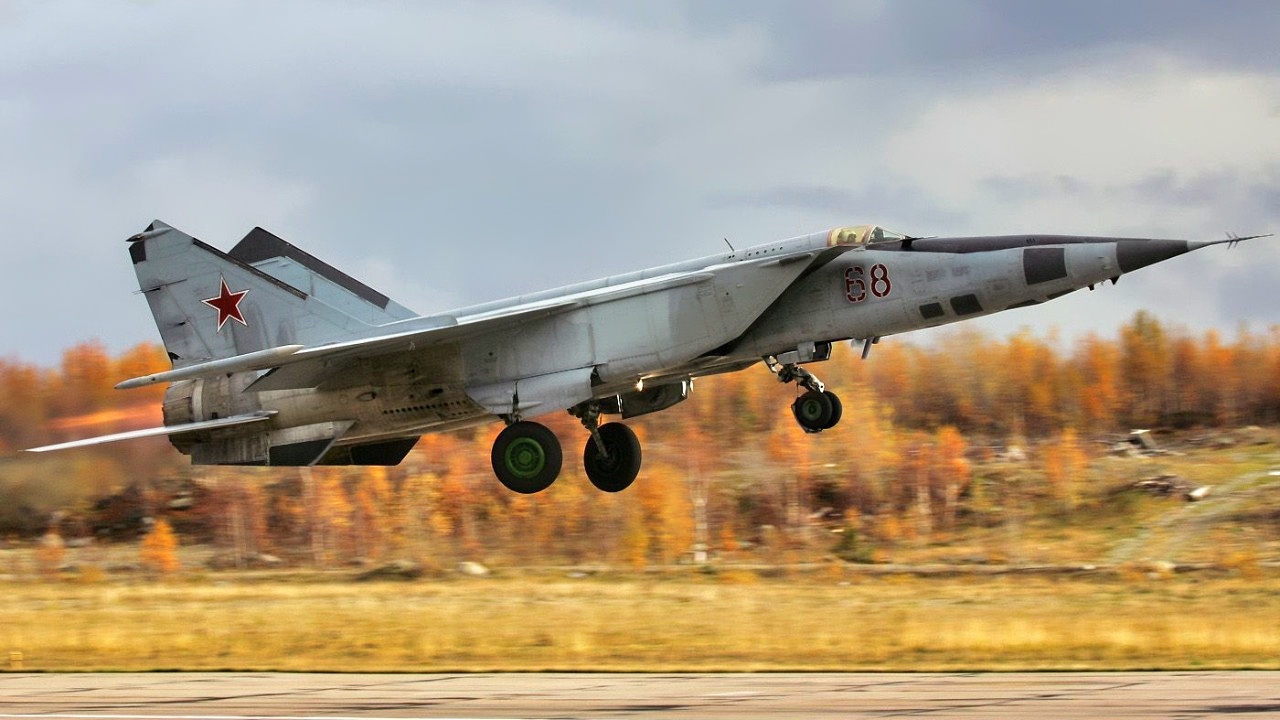
Training variants such as the MiG-25PU entered service alongside operational aircraft to prepare pilots for the demanding flight characteristics of the Foxbat. Featuring a dual-cockpit configuration, the PU retained most of the performance of operational variants while sacrificing combat capability. Across all versions, the MiG-25 family proved adaptable despite its specialized origins. Though eventually superseded by the MiG-31 with more advanced avionics and multi-role capability, the Foxbat remains one of the fastest and highest-flying combat aircraft ever to enter service.
Within the Soviet Union, the MiG‑25 Foxbat was primarily operated by the Air Defense Forces (PVO) and was never issued as a general frontline fighter. Instead, it was concentrated in select regiments tasked with defending key strategic areas or conducting high-speed, high-altitude interception missions. One of the earliest operational units to receive the MiG‑25 was the 146th Guards Fighter Aviation Regiment, which introduced the MiG‑25P interceptor in 1974. Throughout the 1970s, the regiment maintained the aircraft as its primary PVO asset, later upgrading to the improved MiG‑25PD and eventually PDS variants during the late 1970s and early 1980s with the Mig-25PD arriving in 1978 and the PDS in 1979. These upgrades provided more advanced radar, longer-range missiles, and improved all-weather interception capability, allowing the regiment to maintain air defense over critical areas for nearly two decades.
Another notable unit, the 787th Fighter Aviation Regiment, began operating MiG‑25PD aircraft in 1982, later supplementing or replacing these with upgraded variants before eventually transitioning to the MiG‑29 by the late 1980s, reflecting the broader modernization of PVO interceptor forces. The 445th Fighter Aviation Regiment, responsible for air defense in strategically sensitive regions, also received MiG‑25P aircraft in the mid-1970s (specifically 1975) and continued to operate them into the early 1990s. While specific variant upgrade details are less documented for this unit, it is clear that the regiment maintained Foxbats as a critical component of its high-speed interception capability throughout the late Cold War.
In addition to its interceptor role, the MiG‑25 was adapted for high-speed reconnaissance missions, with specialized units operating the MiG‑25R and RB strike-reconnaissance variants from the late 1960s into the 1980s. These aircraft allowed the Soviet Union to conduct high-altitude surveillance over vast areas, with speeds and altitudes that made them extremely difficult to intercept using contemporary Western fighters. While exact regiment designations for reconnaissance operations varied, the use of Foxbats in this role was an essential part of the Soviet strategic reconnaissance effort.
Across all these units, the MiG‑25 was valued not for versatility but for extreme performance, particularly speed, altitude, and interception capability, enabling the PVO to counter high-altitude threats such as strategic bombers and reconnaissance aircraft. By the end of the Cold War, most Soviet Foxbat units had retired the aircraft, with the MiG‑31 assuming its role as the primary high-speed, long-range interceptor within the PVO structure. The MiG‑25’s deployment, concentrated among a few highly specialized regiments, reflects its status as one of the most capable and specialized aircraft in Soviet aviation history.
Last Update 12/01/26